Skill is far more important than degree
Bachelor of Computer Applications (BCA)
BCA Full Form, Course, Duration, Fees, Admission, Subjects, Career Options..
This Story also Contains
1. What is BCA?
2. What is the BCA Full Form?
3. BCA Course Details: Highlights
4. BCA Eligibility Criteria
5. BCA Course Admission Process
6. Modes of the BCA Course
7. Global Recognition of BCA
8. Top Certifications to Combine with BCA
9.BCA Course Statistics
10.BCA Seat Intake
11.BCA Syllabus
12.Scope, Industry Relevance, and Future Trends of the BCA Course
13.Course Comparison: B.Tech vs. BCA
14.Career Opportunities after BCA
15.Top Private BCA Colleges in India with Fees
- Key Attributes of the BCA Course
…BCA Course Duration – 3 Years (6 Semesters)
BCA Eligibility Criteria – 10+2 from a recognised board, with a minimum of 50 per cent marks .
BCA Admission Process – Online / Offline - BCA Course Focus – Programming, Data Management, Networking, Cloud Computing, Web Development, and Software Engineering
• BCA Course Fees – Rs.BCA Job Profiles – Software Developer, Database Administrator, System Analyst, Web Designer, Application Tester
What is BCA?
The Bachelor of Computer Applications (BCA) is a three-year undergraduate degree in computer science and information technology. The course focuses on computer programming, software development, database management, and web technologies. It helps students build the technical and analytical skills required in the IT industry. BCA is a good choice for students who want to work in areas such as software engineering, networking, or data analysis.
What is the BCA Full Form?
The full form of BCA is Bachelor of Computer Applications. BCA is a three-year undergraduate degree programme in the field of computer applications. After graduation, candidates can apply for careers such as Software Developer, Graphic Designer, Business Analyst, and Database Engineer.
BCA Course Details: Highlights
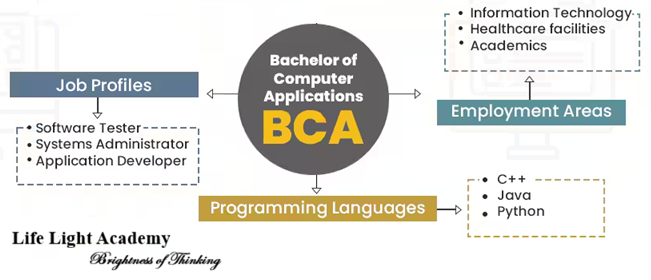
The BCA programme prepares students with skills in computer applications, programming, networking, and web development. Graduates can pursue careers in IT, software development, and systems analysis, with competitive salary packages. Below, the table provides key highlights of the course, including course duration, entrance exams, course fees, average salary, job profiles, and top recruiters:
| Particulars | Values |
|---|---|
| Degree Name | BCA |
| BCA Full Form | Bachelor of Computer Applications |
| BCA Course Duration | 3 Years |
| BCA Entrance Exams | |
| BCA Eligibility Criteria | 10+2 from a recognised university |
| BCA Course Fees | |
| Average BCA Salary | |
| BCA Career Options | Software Developer, Software Tester, Junior Programmer, Database Administrator, System Analyst |
| BCA Employment areas | IT, Banking, Advertising, Media, Government Agencies |
| BCA Top Recruiters | Cognizant, Infosys, HCL, Deloitte, Microsoft, Oracle, Facebook, Twitter, Capgemini, NIIT, IBM, Deutsche Bank |

BCA Eligibility Criteria
Each college prescribes the eligibility criteria for the BCA course as per the guidelines issued by the University Grants Commission (UGC). Students from any stream can apply for this course. They can check these details either on the official website of the institute or the programme brochure. In the table below, we have mentioned the general BCA eligibility criteria.
| BCA Course Eligibility Parameters | BCA Course Eligibility Details |
|---|---|
| BCA Educational Qualification | 10+2 from a recognised board in India |
| BCA Aggregate score criteria | 45 per cent (for general), 5-10 per cent relaxation for reserved category applicants |
| BCA Age Limit | No prescribed age limit |
| BCA Compulsory Subjects | Some colleges require to be a compulsory subject |
- Top BCA Specialisations
BCA is a diverse degree which offers knowledge of many career paths. Candidates can choose their desired specialisation as per their interests and future goals. It will help them make a successful career. Listed below are some of the popular specialisations available in the BCA degree.
• Computer Graphics
• Word Processing
• Internet Technologies
• Database Management
Programming Languages
• Personal Information Management